



Tomáš Sixta
A Visit to Takamori
An introduction to this issue’s reading material
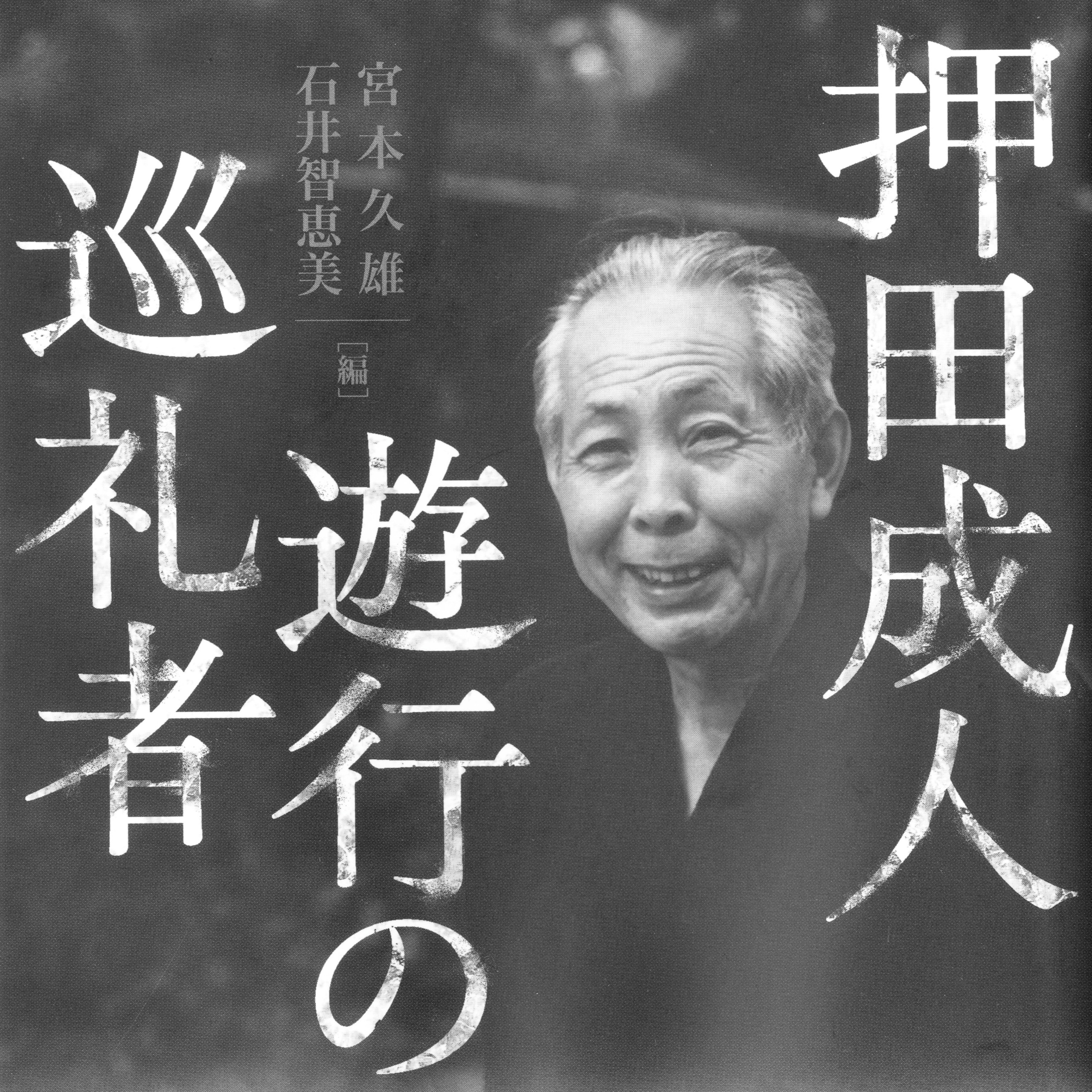
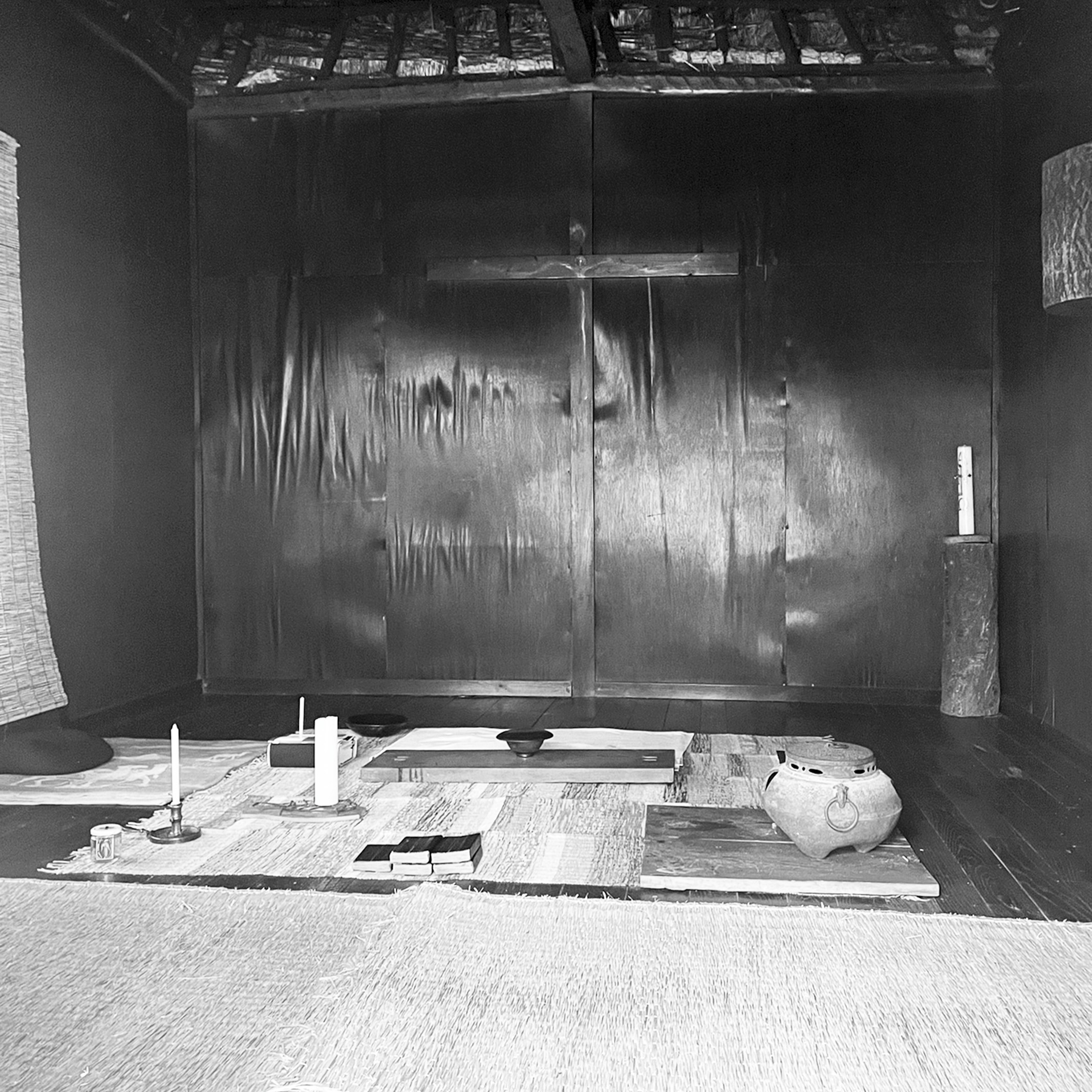
The issue’s editor recounts his discovery of the figure of Shigeto Oshida OP and the genesis of the Salve issue on Japanese Christianity, culminating in a visit to the Takamori Soan community in the summer of 2026. He describes his encounters with its residents (Father Watanabe, Sister Kawasumi) and the enduring ethos of poverty, work and prayer. He explains the inspirational nature of Oshida’s synthesis of Buddhism and Christianity, his independence from institutions and his rejection of superficial spirituality, and presents the content of this issue on Japanese Christianity as a portrait of inspiring and creative otherness.
Let us meet in Galilee
An interview with Vincent Shigeto Oshida
Takamori, Japan, 1998
This interview with the Dominican Vincent Shigeto Oshida explores his life story (his two miraculous escapes from drowning) and the philosophy of the Takamori Soan community, based on absolute poverty, work and contemplation. Oshida, who describes himself as “a Buddhist who has encountered Christ,” regards Zen and Christianity as a direct contact with reality that transcends the intellect, and criticises the wealth and institutionalisation of the Church.
Shigeto Oshida OP
Spiritual Practice and the Direction of Everyday Life
This essay is a meditative reflection on spiritual practice as the unification of breath, holistic vision and detachment from the ego. Drawing on personal experiences (illness, zazen, fasting, spiritual masters), he links Zen Buddhism with Catholic mysticism, explores the “dark night of faith” and distinguishes between the “killing of the ego” (the path to one’s true nature) and the “killing of the self” (a fall into emptiness). Humility, grace and ethics are key as prerequisites for the spiritual life.
Shigeto Oshida OP
Fire Within Man
This essay interprets fire as a universal symbol of purification and union with God – ranging from a personal experience of healing during a Buddhist fast, through biblical motifs (Mount Sinai, Pentecost, baptism by fire), to the Eucharist as “being set ablaze by the fire of Christ.” It criticises the rationalisation and complacency that have supplanted the mystical dimension of fire, and links the etymology of the word hito (human) with “holding back fire” as the essence of humanity.
Two memories of Shigeto Oshida OP
Timothy Radcliffe OP
A Living Koan
Cardinal Timothy Radcliffe OP’s foreword to Lucien Miller’s book on Oshida is a personal recollection of a meeting at Takamori Soan and a reflection on Oshida as a “living koan” who challenged Western analytical thinking (a reference to McGilchrist’s book The Master and His Emissary). Radcliffe explores Oshida’s themes – the encounter as a “word-event,” liberation from the ego, illness as a teacher, working in the fields and joy – as a call to renew the Christian imagination.
Lucien Miller
Hermit and Pilgrim
This memoir recounts his visits to the Takamori Soan community from 1976 onwards – the topography of the hermitage, the aesthetics of wabi-sabi, encounters with Father Oshida and Sister Kawasumi, the experience of liturgy with fire and the “Voice” (Bat Kol), work in the rice fields, and the Forest of Remembrance for the victims of war. It concludes with an account of the September 1981 conference on the nuclear threat and Oshida’s death in 2003. The text is a key source on the biography and spirituality of the community’s founder.
Andrea Molle
Spiritual Life in Modern Japan: Understanding Religion in Everyday Life
This study focuses on Japan, where religion is conceived differently in many ways from in the West – even though economically Japan stands with the West. His major emphasis is to examine practice at the individual level rather than to focus on historic institutionalized macro traditions. He offers a variety of examples to substantiate the argument that scholars study Japanese religion neither in historically framed contexts nor in a context of globalized “spirituality,” but rather as a uniquely Japanese comprehensive spiritual attitude as it is actually lived and experienced in Japanese people’s everyday lives.
Kentaro Miyazaki
The Kakure Kirishitan Tradition
This study traces the development of the kakure kirishitan (hidden Christians) from their underground faith during the Edo period to their present-day demise. It analyses their organisational structure (chōkata, ojiyaku), rituals, orasho prayers and syncretism with Buddhism and Shinto (Maria Kannon, kegare, tatari). It explains why the communities did not return to Catholicism after 1873, and documents the disintegration of the groups from the 1990s onwards as a manifestation of their transformation into a folk religion.
Marcel Koníček
The Faces of Japanese Christianity
Prayers of Believers and Non-Believers
Marcel Koníček’s essay traces the imprint of Christianity in modern Japan through figures ranging from Meiji-era samurai converts (Ebina, Neesima, Abe Isoo, Uchimura Kanzo) through the tension between faith and Japanese identity, to the writer Shusaku Endo, whose work (Silence, Deep River) seeks to reconcile Catholicism with Japanese culture. It concludes with a comparison with Kenzaburo Oe as a representative of spirituality without Christian faith.
Darja Kawasumi
It’s really just about hot water for tea
Darja Kawasumi’s essay reflects on the Japanese tea ceremony (chanoyu) as a personal journey towards faith and spirituality. She describes the four principles of tea – wa (harmony), kei (respect), sei (purity), jaku (tranquillity) – and their connection to Zen, Taoism, Shinto and Confucianism. Drawing on her own experiences as a foreigner in Japan, she shows how the ritual enables one to transcend the ego and achieve transcendence through the aesthetics of wabi-sabi and the simple act of “giving and receiving”.
On Japan, the human scale and the present moment
An interview with Michal Škoda
This interview with the artist Michal Škoda (conducted by N. Schmidt) focuses on his relationship with Japan through space, architecture and materials (wood, stone, paper), and on his artist residency on the island of Teshima. It describes the transformation of the islands of Naoshima, Teshima and Inujima into centres of contemporary art (Fukutake, Ando, SANAA), linked to the revitalisation of local communities. The highlight is a reflection on the Teshima Art Museum (Nishizawa, Rei Naito) as a “temple” of the present moment.